Commercial demolition · St. Lucie County
Commercial demolition in St. Lucie County
Commercial demolition in St. Lucie County is mostly sequencing. The building cannot come down until utilities, regulators and neighbors are dealt with in the right order, and a missed step tends to surface as a stop at the worst moment.
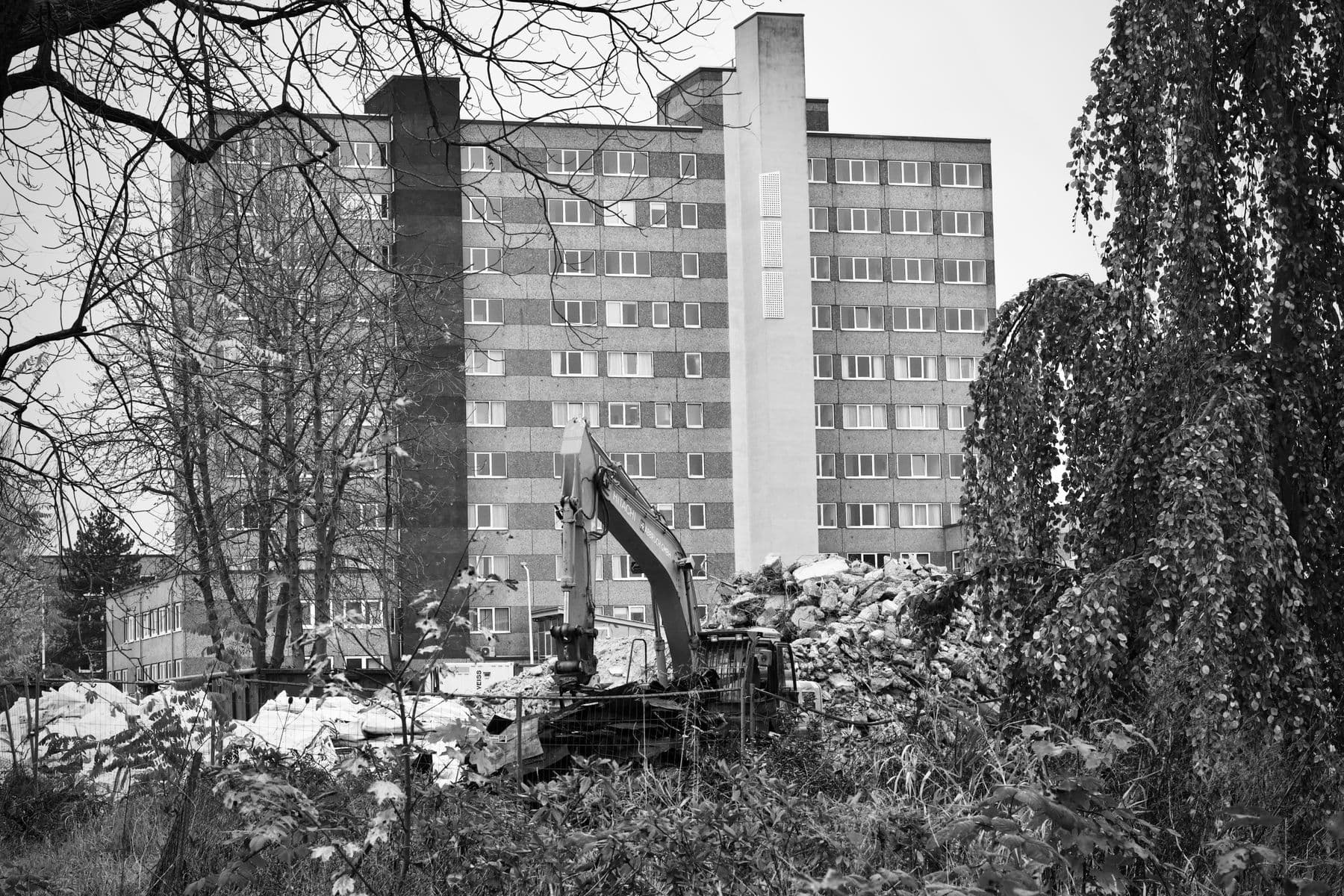
Fort Pierce sets out that order plainly. Its demolition checklist asks for Planning Department pre-approval, Engineering Department pre-approval on commercial jobs, and pre-approval from Fort Pierce Utilities Authority or FPL for a full demolition, along with a Debris Affidavit. For a commercial building built before 1972, the city also wants an asbestos report.
State asbestos rules apply on top of the city's. FDEP's Southeast District takes demolition notices for St. Lucie County, and the department says every demolition needs one, even where no asbestos is found. A building permit does not stand in for it, so we arrange the licensed survey early and let the notice and the permit move together.
On a county permit, work valued at 5,000 dollars or more needs a recorded Notice of Commencement, posted on site before the first inspection. Commercial debris is heavy and mixed. St. Lucie County's Baling & Recycling Facility on Glades Cut-Off Road accepts construction and demolition debris, and concrete and steel are separated wherever a recycler will take them.
We quote commercial demolition at any size. Send the site plan and whatever drawings exist, and we will walk the property with you.
Order of work
- Walk the property and review drawings, surveys and any environmental reports you hold.
- Arrange the licensed asbestos survey and request utility disconnects.
- Collect planning, engineering and utility pre-approvals, then file for the permit and the FDEP notice.
- Record and post the Notice of Commencement where the value requires it.
- Complete any abatement, then strip salvage and recyclable material.
- Demolish the structure by machine in an engineered sequence.
- Break out footings and slabs down to the depth in the contract, truck the rubble out, then level the pad.
Watch points
Where this kind of job runs into trouble, and how we handle it
Utility releases arriving late
FPUA, FPL, water and gas each release on their own schedule. We request disconnects at the start, track each one, and do not begin mechanical demolition until every release is confirmed in writing.
Asbestos found after the schedule is set
Roofing, flooring and pipe insulation in older commercial buildings are common sources. The licensed survey comes before pricing, and any abatement runs as its own phase ahead of demolition rather than as an interruption in the middle of it.
Dust and debris reaching the street
Commercial sites usually sit against sidewalks, parking and open businesses. We fence the site, wet down during breaking and loading, set truck routes with the permit office, and work under rigorous safety protocols.
Buried tanks and abandoned services
Older commercial lots can hide fuel tanks, grease interceptors and lines that appear on no drawing. When one turns up, digging in that area stops until it is identified and handed to the licensed party responsible for it.
Outside our scope
Asbestos surveys and abatement, utility disconnects, engineering, and the closure of any fuel tank found on site are separate licensed work that we coordinate. We do not judge a building's age from its appearance, and we do not start mechanical demolition on a verbal utility release.
Questions
About commercial demolition
What does Fort Pierce require before a commercial building comes down?
The city's demolition checklist lists Planning and Engineering pre-approvals, FPUA or FPL pre-approval for a full demolition, a Debris Affidavit, and an asbestos report for commercial buildings built before 1972. The city revises the checklist from time to time, so we work from the current copy.
Is an FDEP notice needed if the survey finds no asbestos?
Yes. FDEP states that all demolitions need notice, whether or not asbestos is present, and that a building permit does not satisfy the federal asbestos rule. For St. Lucie County the notice goes to the Southeast District.
Can you take down a building next to one that stays open?
Yes, with a sequence built for it. We set the fence line, the direction the structure comes down, and the hours of the noisiest work around the neighbor, and we agree that plan with you before the permit is filed.
What will my demolition cost in St. Lucie?
Two houses on the same Port St. Lucie street can quote quite differently, so we post no rates. The price is set after a visit, or from photos and plans that show enough, and it follows the materials, the footprint and height, the asbestos survey, the service disconnects, any septic tank to abandon, how equipment gets in, what sits next door, what stays, and how far the debris travels.
Is any job too small or too large in size for you?
No. If something on the property has to come down, from a screen enclosure or a mobile home to a commercial building on US 1, we will quote it, whole or in part. Just tell us what has to survive.
Is Romco Builders licensed?
Yes. Romco Builders is a licensed Florida general contractor with its office in Fort Lauderdale. We do not do the separately licensed trades ourselves: asbestos abatement, electrical and plumbing disconnects, septic abandonment, mold remediation and tree removal go to licensed firms, and we coordinate their timing.
Start to finish
How a St. Lucie job moves
Reach out
Call or fill in the form. Mention whether the place has a septic tank; it adds a step before the permit.
We look at the property
We come out and trace the services: the FPL drop, the water line, and the septic tank or sewer tap. Then we look at the truck route in and at what sits next door.
A written scope and quote
Each line of the scope says come down, stay, or leave on a truck. Items waiting on the survey result are flagged so nothing is assumed.
Survey, notice, letters, permit
A licensed asbestos survey, the state demolition notice, the utility letters, then the permit from the city, town or county.
Demolition and hauling
The crew works through the scope in order. C&D debris goes to a permitted site such as the county facility on Glades Cut-Off Road, and every ticket is filed.
Final inspection
Last comes the final inspection from the city, town or county. After that the lot is bare and graded, or the shell you wanted kept is still standing.
Commercial demolition anywhere in St. Lucie, including Port St. Lucie, Tradition, St. Lucie West, Sandpiper Bay, Fort Pierce, Lincoln Park, St. Lucie Village, River Park, Lakewood Park, White City, and every other St. Lucie city.
Other work
More demolition we quote
- Interior demolitionStrip a suite or a house to the studs while the shell and its live systems stay intact.Interior demolition in St. Lucie →
- Selective demolitionTake out an addition, a wing or a bay and keep the building that remains in service.Selective demolition in St. Lucie →
- House demolitionA full teardown of a single-family house, from utility letters to a graded lot.House demolition in St. Lucie →
- Structural demolitionFrames, walls and floors taken down in order, including buildings under unsafe orders.Structural demolition in St. Lucie →
- Concrete removalSlabs, driveways, footings and foundations broken out, hauled and recycled.Concrete removal in St. Lucie →
- Pool removalBreak out the top and backfill, or lift the whole shell, with the drainage handled.Pool removal in St. Lucie →
- Mobile home demolitionSingle and double wides removed with chassis, tie-downs, add-ons and debris cleared.Mobile home demolition in St. Lucie →
- Storm damage demolitionHurricane, tornado and flood damage taken down with the record your insurer needs.Storm damage demolition in St. Lucie →
- Site clearingLots cleared of old structures, slabs and debris, with protected trees left in place.Site clearing in St. Lucie →
- Asbestos coordinationLicensed survey, FDEP notice and licensed abatement scheduled before demolition.Asbestos coordination in St. Lucie →
- Accessory structure demolitionSheds, detached garages, carports and screen enclosures removed under permit.Accessory structure demolition in St. Lucie →
- Something else?If your job is missing from the list, call anyway. We price odd jobs too.Call (772) 310-3298 →
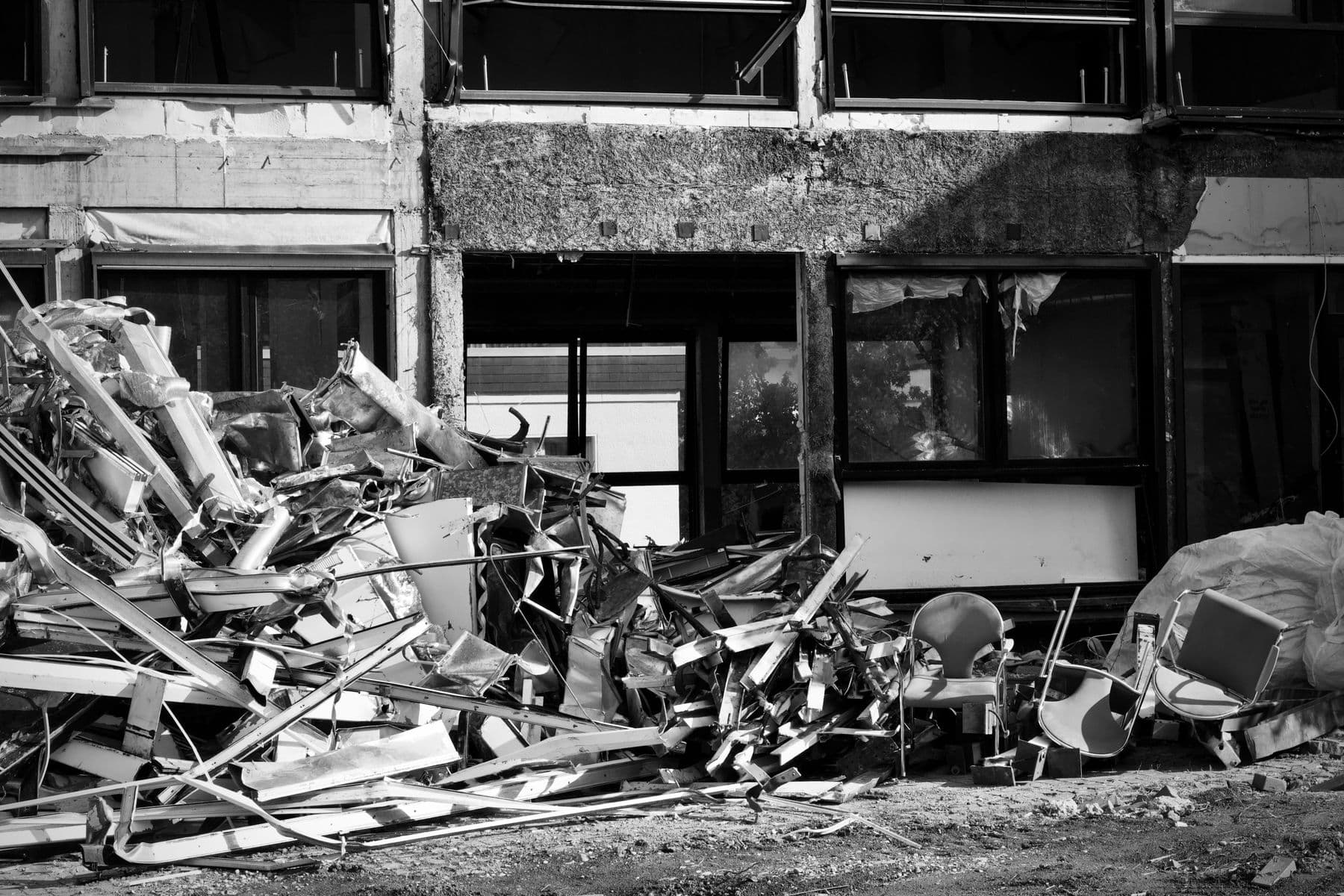
Every type and size, all over St. Lucie County
Tell us what has to come down, and we will quote it.
Romco Builders is a licensed Florida general contractor, headquartered in Fort Lauderdale. A kitchen wall in Tradition and a strip center on US 1 are quoted the same way: on paper, line by line.